Asphalt vs. Metal Roofing: A Real-World Comparison for Homeowners
Materials · 2026-06-14 · National Roofers Team · 7 min read
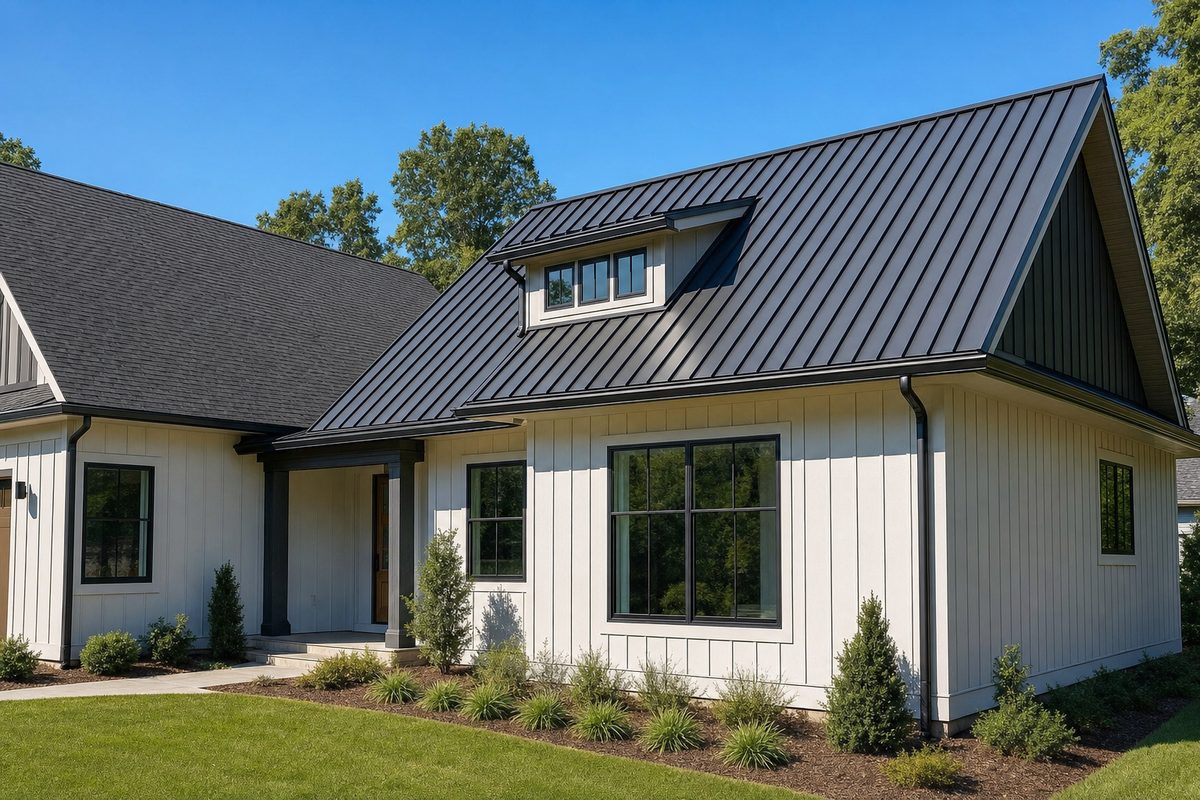
Asphalt shingles cost far less upfront, while metal can last decades longer. Compare real per-square pricing, lifetime cost, hail risk, noise, and installer availability before choosing.
Asphalt vs. metal roofing: the quick answer
Architectural asphalt is usually the sensible choice when the budget is tight, you may sell within 10 to 15 years, or you want the broadest choice of qualified installers. Metal can be a strong long-term choice for an owner who expects to stay for decades and can afford the higher upfront cost. Neither is automatically better. The material has to fit the roof, local weather, and the people available to install it correctly. Start with the condition of the roof you have: signs that point to replacement rather than repair matter more than a material debate when water is already getting inside.
What the real material prices show
For 2026, National Roofers' quote engine lists materials at $120 per square for architectural asphalt, $280 for metal shingles, and $320 for standing-seam metal. A roofing square is 100 square feet. Labor, tear-off, and underlayment are separate line items at $85, $45, and $28 per square. That means material choice is only one part of a complete quote, but it is the part with the clearest gap. A roughly 2,000-square-foot home can measure about 22 roofing squares once pitch and waste are included. Ask for the system components, not just a single total.
| Item | Architectural asphalt | Metal shingles | Standing seam metal |
|---|---|---|---|
| Material | $120 | $280 | $320 |
| Labor | $85 | $85 | $85 |
| Tear-off | $45 | $45 | $45 |
| Underlayment | $28 | $28 | $28 |
| Named-component baseline | $278 | $438 | $478 |
Upfront cost: asphalt wins, and it is not close
On the same roof, metal commonly requires a much larger initial budget because the panels or metal shingles cost more and the detailing is less forgiving. Using the named quote-engine components, the difference between architectural asphalt and standing seam is $200 per square before roof-specific accessories. On a 22-square roof, that is a $4,400 baseline gap. Real installed proposals can differ further because valleys, penetrations, trim, ventilation, panel layout, removal layers, decking repairs, permits, and local labor all change the final price. If you are comparing bids, use the same scope on every proposal and read how to understand a roofing quote before treating a lower number as a bargain. If you are choosing within asphalt first, compare architectural and 3-tab shingles before jumping to a metal bid.
Lifetime cost is the honest comparison
A $12,000 architectural-asphalt replacement and a $30,000 standing-seam roof should not be compared as if both will be replaced next year. The table uses simple present-day-dollar examples over 40 and 50 years. It assumes two $12,000 asphalt cycles over 50 years and one $30,000 metal installation, with no financing, energy savings, resale value, or repair costs included. Those factors can matter, but they vary too much to promise. Metal can avoid a second reroof, yet it does not automatically cost less over time. For many homeowners, the question is whether the added cash is worth durability and fewer replacement disruptions.
| Option | 40-year example | 50-year example | Average annual cost over 50 years |
|---|---|---|---|
| Architectural asphalt at $12,000 per replacement | $24,000 if two 20-year cycles are needed | $24,000 if two 25-year cycles are needed | $480 |
| Standing seam metal at $30,000 | $30,000 for one installation | $30,000 for one installation | $600 |
Durability depends on the hazard
Metal resists fire and sheds snow well, while asphalt is easy to repair in small areas and is installed by more crews. Hail is the important exception to easy metal recommendations. In Colorado, Texas, and Oklahoma hail country, some metal roofs can dent even when they do not leak. A dented panel may be a cosmetic issue, but replacing it can be more involved than replacing a few shingles. Asphalt can lose granules or crack after hail, especially when it is older. Ask a contractor to identify the product's impact rating, explain its product terms, and describe whether a dent affects performance or is mainly an appearance issue. Do not assume any roof is hail-proof.
Noise and energy: real concerns, not deal breakers
A metal roof is not necessarily loud in the rain when it is installed over a solid deck with proper underlayment and attic insulation. Still, sound can be more noticeable in certain homes, especially where the roof is exposed inside, insulation is thin, or rain on porches and additions is already audible. If that would bother you, listen to a comparable roof before you decide. Light-colored metal can reflect more sun than a dark roof, but cooling savings depend on color, insulation, attic ventilation, shade, and local weather. It is reasonable to consider energy performance; it is not reasonable to use a generic savings promise to justify a $30,000 purchase.
Installer availability is a decision factor
Asphalt is installed by a far wider pool of roofers. Standing seam and other metal systems demand accurate measurements, correct panel layout, careful trim work, and flashing details that should not be improvised. In smaller markets, finding a crew with verifiable metal experience can take longer and cost more. A capable asphalt installer is not automatically a capable metal installer. Ask what metal profile the crew installs most often, how they handle valleys and penetrations, who is responsible for panel measurement, and what workmanship terms apply. The contractor-selection questions in choosing the right roofing contractor are especially important for metal.
Which roof is worth it for your situation?
Choose architectural asphalt when you expect a shorter stay in the home, want the lower upfront cost, need simpler spot repairs, or cannot confirm a highly qualified metal installer. Consider metal when you expect to own the home for a long time, value a single long-lived roof, and accept possible hail dents and a higher initial investment. Metal shingles can be a middle ground in appearance and price, but they still need a qualified installer. The fastest way to compare your exact roof is to get an instant satellite-measured quote with like-for-like options, then review the scope rather than relying on square-foot averages.
Get a comparison that matches your roof
A remote quote is a starting point, not a substitute for uncovering hidden rot after tear-off. National Roofers measures the roof by satellite, returns a price in about two minutes without an in-home sales appointment, and matches jobs to vetted local contractors. Use it to compare architectural asphalt, metal shingles, and standing seam on the same measured roof area. Then have the contractor confirm access, layers, deck condition, and flashing details. You can get a no-pressure satellite-measured roof quote before deciding whether the additional cost of metal fits your ownership plan.
Frequently Asked Questions
Is a metal roof worth the extra money over shingles?
It can be worth it if you expect to stay for decades, value a long service life, and can pay the higher upfront amount. It is often not the lowest lifetime-cost option in simple present-day-dollar comparisons, so buyers who may move soon usually get better value from architectural asphalt.
How much more is a metal roof than architectural shingles?
National Roofers' 2026 material pricing is $120 per square for architectural asphalt, $280 for metal shingles, and $320 for standing seam. Labor, tear-off, underlayment, trim, roof complexity, and repairs are additional factors, so compare complete scopes rather than material prices alone.
Are metal roofs too loud when it rains?
Not necessarily. A metal roof installed over solid decking with good underlayment and attic insulation can be quiet indoors. Homes with thin insulation, exposed roof framing, or a noisy porch roof may notice rain more, so inspect a comparable installation if sound is a concern.
Do metal roofs dent from hail?
They can. Some hail strikes dent metal panels without causing a leak, which can create a cosmetic issue in hail-prone areas such as Colorado, Texas, and Oklahoma. Ask about the product's impact rating and how the manufacturer describes cosmetic versus performance-related denting.
How long does a metal roof last compared with asphalt shingles?
A well-installed metal roof can serve for several decades, while architectural asphalt commonly requires replacement sooner. Exact life depends on material quality, installation, ventilation, storms, and maintenance. A warranty is not a guarantee that every roof will reach its maximum stated term.
Can I get a roof quote without a salesperson coming inside?
Yes. You can start an instant satellite-measured quote by entering your address. National Roofers measures the roof remotely and returns an initial price in about two minutes without an in-home appointment. A contractor still needs to confirm site conditions, roof layers, and any concealed damage before work begins.