How Long Does a Roof Replacement Take?
How-To · 2026-07-15 · National Roofers Team · 7 min read
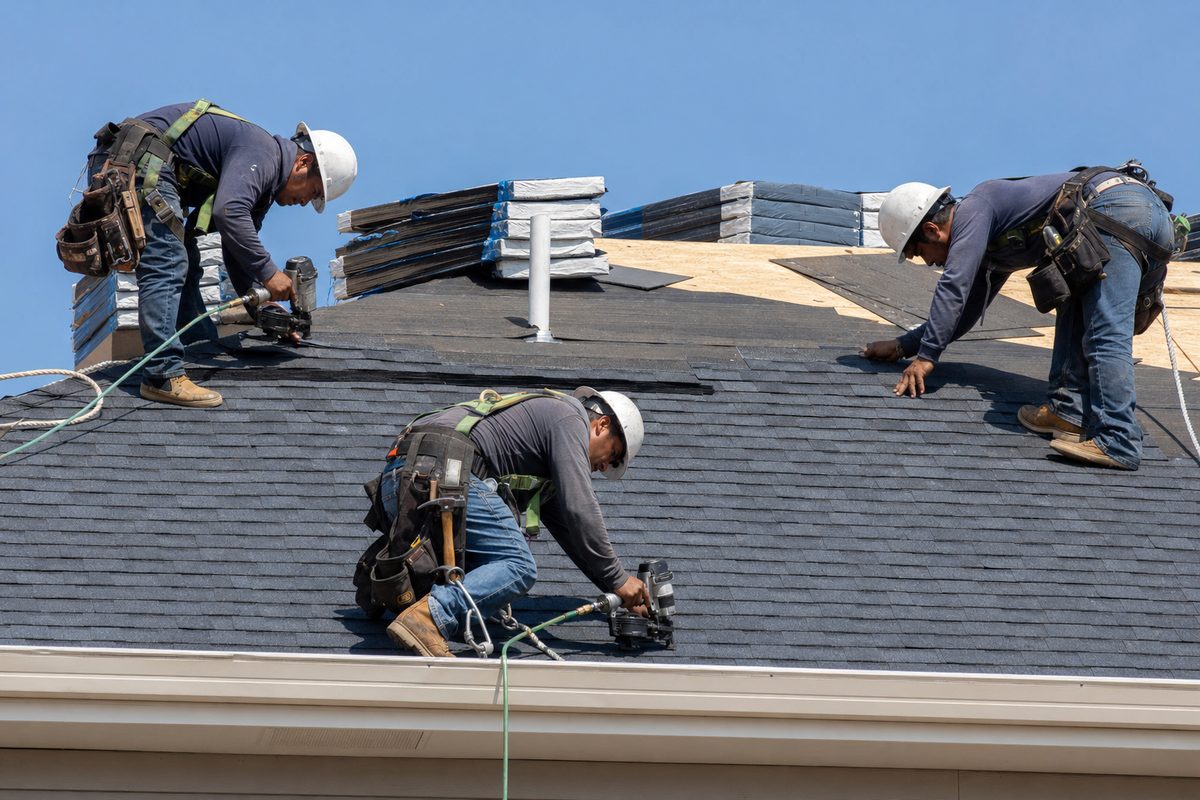
Most crews spend one to three days on the roof, but the full roof-replacement timeline also includes measurement, permits, delivery, and final inspection. See what to expect before work starts.
Quick answer: roof work is usually one to three days
For a typical home, the crew-on-roof portion of a replacement takes one to three days. A simple 2,000-square-foot roof with architectural shingles and a moderate 6/12 pitch can often be completed in one day by a four-person crew. Dormers, steep slopes, multiple valleys, damaged decking, or a weather pause can turn it into a two- or three-day job. That is not the whole timeline homeowners experience. Measurement, permit review where required, material delivery, and final inspection can add days or weeks before and after the crew is on site. You can start with a satellite-measured roof quote before scheduling an inspection or sales visit.
The full project timeline starts before the crew arrives
The first step is confirming roof size, material, and scope. National Roofers can measure the roof remotely and return a price in about two minutes, but site conditions still need to be confirmed before work. If a permit is required, approval timing depends on the city or county. Material is then ordered and delivery is coordinated with driveway access and the planned start date. A homeowner should think of the project as planning, installation, then closeout, not just the day shingles go on. If you are comparing the schedule with the budget, see roof replacement cost per square foot.
Expected crew time by roof size and complexity
Square footage alone does not set the schedule. Roof surface area is larger than the home footprint, and each valley, chimney, skylight, or steep plane adds cutting, flashing, and safe movement time. The ranges below describe active work on a standard tear-off and replacement with asphalt shingles in workable weather. They assume one existing layer and no major structural repair. A contractor should explain what could move your job into the next duration range before work begins. Access constraints can add time as well.
| Roof surface and condition | Typical crew time | What commonly changes the schedule |
|---|---|---|
| Up to 20 squares, simple pitch | About 1 day | Small roof, few penetrations, sound decking |
| 20 to 30 squares, moderate pitch | 1 to 2 days | Valleys, chimney flashing, limited decking repair |
| 30 to 40 squares or steep/complex | 2 to 3 days | Dormers, 9/12 or steeper pitch, more detail work |
| Any roof with widespread damage | 3 days or longer | Multiple decking sheets, weather delays, special materials |
What a typical two-day replacement looks like
A two-day project is not necessarily a problem. It is often the right pace for a larger or more detailed roof, especially when the crew needs time to inspect the deck properly. The exact sequence may shift with delivery timing and daylight, but the crew should keep the roof protected with underlayment or temporary weather protection before leaving. Do not judge progress only by whether shingles are visible by noon; proper tear-off, flashing, and cleanup take time too.Quality matters more than speed.
| Day | Work usually completed | What the homeowner will notice |
|---|---|---|
| Day 1 morning | Setup, landscape protection, tear-off, decking inspection | Dumpster, loud removal work, crew moving around the home |
| Day 1 afternoon | Decking repairs, drip edge, underlayment, flashing preparation | Roof is covered before the crew leaves |
| Day 2 morning | Starter course, field shingles, valleys and penetrations | Nail guns and material movement continue |
| Day 2 afternoon | Ridge work, ventilation, cleanup, magnet sweep, walkthrough | Dumpster removal timing and final inspection are confirmed |
Decking, pitch, and details are the usual schedule changers
The largest unknown after tear-off is the wood deck beneath the old roof. Soft, delaminated, or water-damaged sheathing must be replaced before new materials go on. Each sheet is a small task, but several sheets can add meaningful time and cost. Steep roofs slow the work because crews need additional safety setup and cannot move materials as quickly. Chimneys, walls, skylights, valleys, and pipe penetrations require careful flashing work. Those details are worth the time because a rushed transition is where leaks often begin. Read what a roofing contractor actually does for the work sequence behind the schedule.
Weather can pause work, but the roof should not be left exposed
Rain, lightning, strong winds, and unsafe temperatures can delay a crew. Asphalt shingles should not be handled when they are brittle from cold, and crews should not work through conditions that make the roof unsafe. A responsible contractor watches the forecast and does not tear off more area than can be protected before a storm. If weather interrupts after tear-off, the crew installs underlayment and temporary protection, then returns when conditions allow. Ask before the start date how the contractor handles an overnight rain risk, what is covered, and who will update you. Homeowners can prepare their property using this roof replacement preparation guide.
Permits, delivery, and inspection belong in the schedule
Some jurisdictions require a permit or final inspection, while others have different rules. Permit processing and inspection availability are outside the crew's control, so a written schedule should separate these milestones from the installation days. Material delivery may arrive a day or two before work, and it may be staged on the driveway or roof depending on access and safety. Final inspection, if required, can happen after the crew finishes. Keep your contract, warranty information, and any permit record together until the job is closed. You can track your project progress once work is scheduled.
How to get a realistic date instead of a vague promise
Ask for a target start window, the expected number of installation days, and the conditions that would reschedule the job. Confirm whether the price assumes one shingle layer, how deck repairs are approved, and when the final cleanup occurs. The best schedule is not always the fastest one; it is one that allows proper flashing, ventilation, and weather protection. If you are timing the project around a sale, travel, or storm season, compare availability with the best time of year to replace a roof in Texas. For a roof-specific scope and starting price, get an instant address-based quote.
Frequently Asked Questions
How long does a roof replacement take from start to finish?
The crew usually spends one to three days on the roof. The full process can take longer because it includes remote measurement or inspection, permit approval where required, material delivery, scheduling, installation, and final inspection. Ask the contractor to show each milestone separately so you know what date is actually being promised.
Can a roof be replaced in one day?
Yes. A straightforward roof around 2,000 square feet with a moderate pitch, one existing layer, sound decking, and good weather can be completed in one day by an appropriately staffed crew. Complex geometry, steep slopes, repairs, or weather can make a two- or three-day schedule safer and more realistic.
Will I be without a roof overnight?
A responsible crew should not leave open decking exposed to an expected storm. If the job must pause, the roof should be covered with underlayment and temporary weather protection. Before work starts, ask what the contractor will install if rain arrives after tear-off and who is responsible for monitoring the forecast.
What can delay a roof replacement?
Rain, lightning, high winds, unsafe temperatures, permit delays, late material delivery, and hidden deck damage can all change timing. Roof design matters too: steep pitches, dormers, valleys, skylights, and chimneys require more cutting, flashing, and safe movement than a simple gable roof.
Do I need to be home during roof replacement?
You do not need to watch the crew all day, but you should be reachable. The contractor may need prompt approval for concealed decking damage or access questions. Move vehicles, unlock any needed gates, and leave a reliable phone number before the crew arrives. The work will be loud, so many homeowners choose to be elsewhere.