Roof Replacement Cost in Denver 2026
Pricing · 2026-08-10 · National Roofers Team · 17 min read
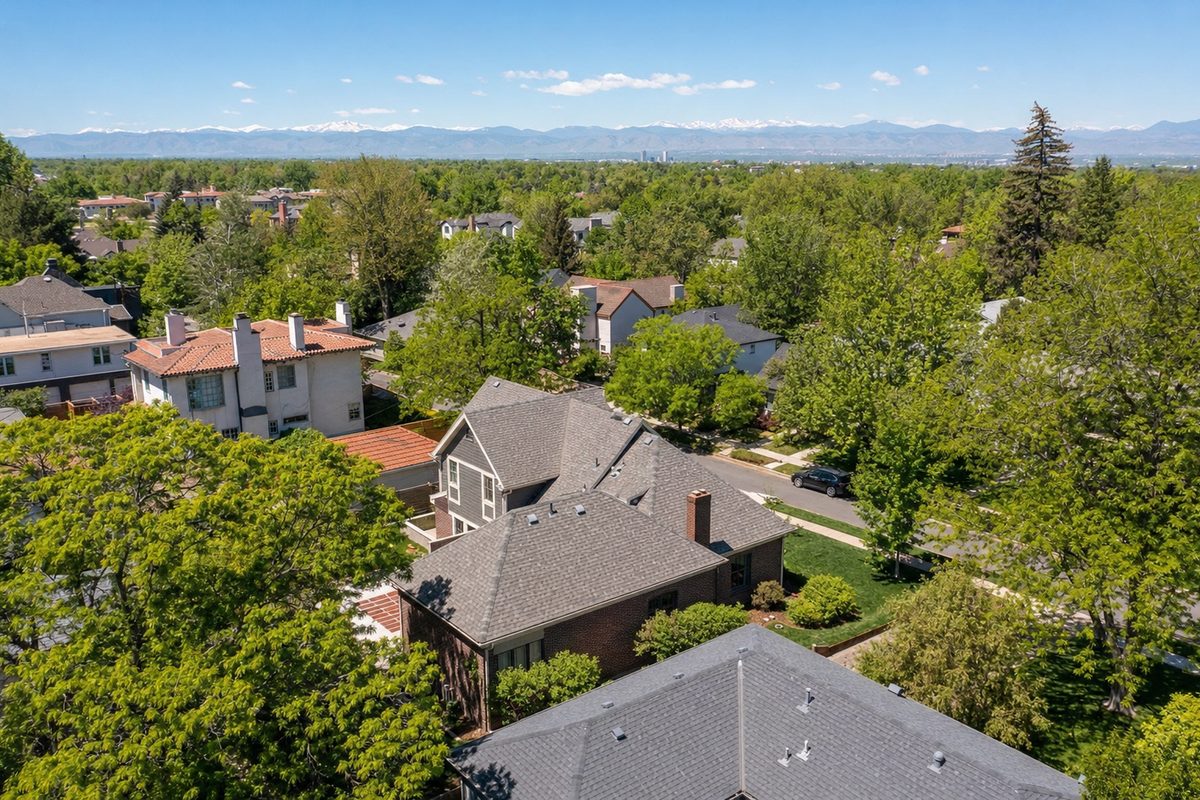
A full roof replacement in Denver typically costs $10,500-$16,500 in 2026. See prices by roof size and material, real permit rules, and the altitude, hail, and snow factors that change a Denver quote.
Denver Roof Replacement Cost at a Glance
A full roof replacement in Denver typically costs $10,500-$16,500 in 2026. For a typical 2,000 square foot home, the roof surface usually works out to about 22 squares once pitch and waste are measured, and an architectural-shingle replacement on that roof commonly lands around $11,000-$15,500 with one old layer, ordinary pitch, and no major decking repair. The low end fits a simple one-story roof with a mild slope. The high end reflects a steeper roof, more cutting around vents and skylights, or a move up to a premium material. Denver's mix of older steep-roofed city homes and newer suburban tract roofs means the range is wider here than in a flatter market, so a measured, address-based quote matters more than a rule of thumb. You can get an instant satellite-measured quote without scheduling an in-home sales visit.
| Roof area | Approximate house footprint | Typical total |
|---|---|---|
| 16 squares | 1,300-1,600 sq ft | $8,800-$11,500 |
| 22 squares | About 2,000 sq ft | $11,000-$15,500 |
| 28 squares | 2,300-2,700 sq ft | $14,000-$19,000 |
| 35 squares | 3,000+ sq ft | $16,500-$21,500 |
Why Denver Pricing Runs a Little Higher Than Flatter Markets
Denver's roofs are shaped by altitude, hail, sun, and a short window of good installation weather. The city sits about 5,280 feet above sea level, and UV exposure at that elevation is meaningfully more intense than at sea level, which accelerates granule loss and embrittlement on asphalt shingles over time. A large share of the older housing stock inside Denver proper has steeper roof pitches than a typical newer suburban tract home, and steep, cut-up roofs simply take longer to tear off and install. Add a compressed dry-weather installation season and a citywide reroof rush every spring after hail season, and per-square labor pricing tends to sit a bit above what you would see in a milder, flatter metro. None of that means every Denver job costs more. It means the honest starting point is a measured quote rather than a generic national average.
| Factor | Typical effect | Why |
|---|---|---|
| High-altitude UV exposure | Shortens shingle service life | UV intensity is significantly higher at 5,280 feet than at sea level |
| Steep or cut-up older roofs | Adds 10-20% labor time | More cuts, valleys, and dormers on pre-1950 roof forms |
| Short dry installation season | Compresses scheduling, can raise spring/fall pricing | Cold, wind, and snow limit safe workdays in winter |
| Heavy wet spring snow | Can delay start dates | March and April are Denver's snowiest months |
Cost by Roofing Material in Denver
Architectural asphalt is the standard choice for most Denver homes and the practical middle ground between price and durability. Standard 3-tab asphalt costs less but has a shorter service life and less resistance to the freeze-thaw cycling and hail impact common on the Front Range. Class 4 impact-resistant shingles use a reinforced or polymer-modified mat that passes a stricter impact test than standard shingles, which is a genuine durability advantage in a hail-prone climate; the tradeoff is a higher material cost per square. Metal and standing-seam systems cost more upfront but hold up well to wind, snow shedding, and UV over a long ownership horizon. Clay tile appears on some older Denver-area homes but is rare in new installations because of weight and cost. The ranges below are 2026 planning ranges for a roughly 22-square roof under ordinary conditions. For more on how the two most common asphalt tiers compare, see architectural versus 3-tab shingles.
| Material | Quote-engine material price per square | Typical installed total |
|---|---|---|
| 3-Tab asphalt | $85 | $8,800-$12,500 |
| Architectural asphalt | $120 | $11,000-$15,500 |
| Designer asphalt | $165 | $13,500-$18,500 |
| Metal shingles | $280 | $17,000-$25,500 |
| Standing-seam metal | $320 | $19,500-$29,500 |
| Clay tile | $680 | $32,000+ |
How the Per-Square Math Works
A roofing square is 100 square feet of roof surface. National Roofers' quote engine starts architectural asphalt materials at $120 per square, plus $85 for labor, $45 for tear-off, and $28 for underlayment. That is a $278-per-square baseline for those four components, or $6,116 across 22 squares. The full installed total is higher because it also includes starter and ridge material, flashing, ventilation, disposal, permit handling, contractor overhead, and any repairs found once the old roof comes off. On a Denver roof with a steeper-than-average pitch, expect the labor line specifically to run above this baseline, since pitch adds time before a single shingle goes down. See roof replacement cost per square foot for how squares convert to square footage on your specific home.
| Component | Price per square | 22-square baseline |
|---|---|---|
| Architectural asphalt material | $120 | $2,640 |
| Labor | $85 | $1,870 |
| Tear-off | $45 | $990 |
| Underlayment | $28 | $616 |
| Subtotal for these components | $278 | $6,116 |
What Actually Drives a Denver Quote Up or Down
Pitch is the single biggest local variable. Many pre-1950 homes in Denver's older neighborhoods have steeper rooflines than a typical newer ranch-style suburban home, and a steep roof slows every stage of tear-off and installation. A second layer of old shingles adds disposal weight and labor. Decking condition matters too: moisture that has worked its way under aging shingles for years can leave plywood or old skip sheathing soft, and that repair only becomes visible after tear-off. Roof access, tree cover, and how close the house sits to neighboring structures also affect how quickly a crew can stage material and set up safely. A roof with many penetrations, such as skylights, plumbing vents, and a chimney, needs more flashing work than a simple rectangular roof. None of these factors are unique to any one Denver neighborhood; they depend on the specific house.
| Driver | Typical effect on price |
|---|---|
| Steep pitch (older roof forms) | Adds meaningfully to labor time |
| Second shingle layer to remove | Adds disposal and tear-off labor |
| Decking repair after tear-off | Priced separately once discovered |
| Multiple penetrations (skylights, chimney, vents) | Adds flashing and detail labor |
| Difficult access or tight lot | Slows material staging and disposal |
Denver's Climate and What It Does to a Roof
Denver's roofing challenges are physical, not financial. The metro sits along the Front Range corridor, where afternoon thunderstorms that build over higher terrain regularly produce hail; the region averages roughly 11 hail events of an inch or larger per year over the past decade, with the season concentrated from May through July. Hail large enough to bruise or fracture standard asphalt shingles is a real, recurring mechanical stress in this market, and it is one reason some homeowners choose a more impact-resistant material rather than the least expensive shingle available. Beyond hail, Denver's high elevation means stronger UV exposure than most U.S. cities, which speeds up granule loss and shingle brittleness over the life of a roof. Winter brings sharp freeze-thaw cycling, where meltwater seeps into small gaps, refreezes, and gradually widens them, a slow mechanical process that is hardest on aging flashing and worn shingle edges. Add wide daily temperature swings, sometimes 30 to 40 degrees between a cold morning and a sunny afternoon, and materials are constantly expanding and contracting. Heavy, wet spring snow, most common in March and April, adds real weight to a roof deck and can reveal marginal structural or drainage issues that a lighter, drier snow would not.
| Climate factor | Physical effect on the roof |
|---|---|
| Hail (peak May-July) | Impact bruising or fracturing of shingle mat and granules |
| High-altitude UV | Accelerated granule loss and shingle embrittlement |
| Freeze-thaw cycling | Gradual widening of small gaps in flashing and shingle edges |
| Wide daily temperature swings | Repeated expansion and contraction of roofing materials |
| Heavy wet spring snow (March-April) | Added structural load and drainage stress |
Class 4 Impact-Resistant Shingles as a Durability Choice
Class 4 is the highest rating in the UL 2218 impact test, which drops a steel ball onto a shingle sample to simulate hail strikes; a Class 4 shingle must withstand a 2-inch ball dropped from 20 feet without cracking through the back of the mat. Manufacturers reach that rating by blending a polymer, often SBS rubber, into the asphalt or by reinforcing the shingle's internal mat, which lets the material flex on impact instead of splitting. In a market where hail is a routine mechanical stress rather than a rare event, that added flexibility is a legitimate durability upgrade, and it typically comes with a longer service life than a standard architectural shingle. The tradeoff is cost: Class 4 material generally runs higher per square than standard architectural asphalt, which shows up as a higher line in the material column of a quote. Homeowners weighing the upgrade should think of it the same way they would think about choosing a longer-lasting water heater or a better set of gutters, as a durability and maintenance decision, not a discount program.
| Class | Steel ball size | Drop height |
|---|---|---|
| Class 1 | 1.25 in | 12 ft |
| Class 2 | 1.50 in | 15 ft |
| Class 3 | 1.75 in | 17 ft |
| Class 4 | 2.00 in | 20 ft |
Denver Neighborhood and Housing-Stock Variation
Roof style and access change by neighborhood because the housing stock was built in different eras, not because a ZIP code carries a fixed price. Wash Park, Congress Park, and the Highlands, including the Potter-Highlands Historic District, are dominated by early-1900s Denver Squares, Craftsman bungalows, and Tudor Revival homes with steeper, more detailed rooflines, dormers, and narrow lots with alley access. Cherry Creek mixes older homes with larger, more custom infill construction that can have more complex roof geometry. Central Park, the neighborhood built on the footprint of the old Stapleton airfield, and similar-era Green Valley Ranch in Aurora are largely 2000s-and-newer construction with simpler, more uniform roof forms and easier truck and dumpster access. Suburban communities such as Lakewood, Arvada, Littleton, and Highlands Ranch have a broader mix of 1960s-through-2000s ranch and two-story homes, generally with moderate pitches and straightforward access. Any of these areas can also contain an outlier: a heavily wooded lot, a long driveway, or a home with an unusual addition. Treat neighborhood era as a planning signal about roof style, not a substitute for a measured quote.
| Area | Typical era | General roof characteristics |
|---|---|---|
| Wash Park, Congress Park, Highlands | Early 1900s-1930s | Steeper pitches, dormers, more roof detail |
| Cherry Creek | Mixed older and newer infill | Variable, some larger custom roof geometry |
| Central Park (former Stapleton) | 2000s and newer | Simpler forms, easier access |
| Green Valley Ranch (Aurora) | 2000s and newer | Simpler forms, easier access |
| Lakewood, Arvada, Littleton, Highlands Ranch | 1960s-2000s | Moderate pitches, mostly straightforward access |
Denver Permits and the Green Buildings Ordinance
Most full reroofs in the City and County of Denver require a permit, and the rule for repairs is specific: a roofing repair on a building under 25,000 square feet needs a permit once the repaired area exceeds 10% of the roof or two roofing squares, whichever is smaller. Denver issues residential reroof permits as a quick permit, meaning a field inspection replaces a full plan review, and the city calculates the permit's project valuation using a published rate of $5.25 per square foot of roof for residential shingle roofs, which is then run through the city's standard valuation-based fee table. For a roughly 2,200 square foot roof, that valuation works out to about $11,500, which lands in a fee bracket of roughly $115 under Denver's published schedule as of this writing; confirm the current fee and bracket with Community Planning and Development before you budget, since fee tables are updated periodically (City and County of Denver fee schedule). A final roof inspection is required on every permitted reroof. Denver's Green Buildings Ordinance also matters for larger buildings: it requires a cool roof or another compliance path on new buildings, additions, and roof permits for buildings of 25,000 square feet or more. Single-family homes, duplexes, and most attached homes under three stories are specifically exempt from the ordinance's building-size compliance options, though the city notes that certain residential buildings only need to meet the ordinance's cool-roof requirement. If your project involves a larger multifamily or mixed-use roof, ask your contractor how the ordinance applies before finalizing material choice (Denver's Green Buildings Ordinance). Also confirm that any contractor you hire carries liability and workers' compensation coverage before work begins.
| Item | Requirement |
|---|---|
| Full reroof | Permit required |
| Repair threshold | Permit required over 10% of roof area or two squares, whichever is smaller |
| Permit type | Quick permit (field inspection, no full plan review) |
| Valuation basis | $5.25 per sq ft of roof area for residential shingle roofs |
| Final inspection | Required on every permitted reroof |
Timing a Denver Roof Replacement
Denver has a genuinely short reroofing season compared to milder climates, and that compresses both scheduling and pricing. Winter is difficult: shingles need warmth to seal properly, cold can make them brittle during installation, and snow or ice on a roof deck creates real safety risk for a crew, so most contractors slow down or stop scheduling standard reroofs from December through February. March and April are Denver's snowiest months on average, and a heavy, wet spring storm can delay a scheduled start with little notice, so early spring bookings carry some schedule risk even though demand is lower. Late spring through summer is the busiest stretch, driven partly by the seasonal jump in hail activity that leaves many roofs needing attention at the same time, and contractor calendars fill up weeks or months out. Early fall, roughly September through October, is often the sweet spot: daytime temperatures are still warm enough for proper shingle sealing, the worst of hail season has passed, and crews are past their summer backlog but not yet racing the first hard freeze. Booking in early fall, or locking in a spring slot well before hail season ramps up, tends to give homeowners the most schedule flexibility and the least pressure on price.
| Period | Conditions | Scheduling and pricing effect |
|---|---|---|
| December-February | Cold, snow, ice | Most standard reroofs paused or delayed |
| March-April | Snowiest months, heavy wet snow | Lower demand but real weather delay risk |
| May-July | Peak hail season | Highest demand, longest lead times |
| September-October | Mild, dry, past hail peak | Best combination of availability and stable weather |
Signs You Need Replacement Rather Than Repair
Not every roof problem calls for a full replacement. Isolated damage, such as a handful of cracked shingles after a windstorm or a single failed flashing point, is often a repair. Full replacement usually makes more sense when granule loss is widespread across multiple slopes, when shingles are curling or cracking over large areas rather than in one spot, when you can see daylight or moisture staining in the attic in more than one location, or when the roof is old enough that its expected service life has largely run out. A roof nearing or past 20 to 25 years old, especially one that has been through repeated Front Range hail seasons and years of intense high-altitude UV exposure, is a reasonable candidate for a full evaluation even if it is not actively leaking yet. For a more detailed walkthrough of what to check, see signs your roof needs replacement.
How to Compare Bids So They Are Actually Comparable
Two Denver bids with different bottom lines are only comparable if they describe the same scope. Ask every contractor for the measured square count, the exact material and product line, how many layers of tear-off are included, the underlayment type, and the flashing and ventilation plan. A bid that names ice-and-water shield at eaves and valleys, proper drip edge, and a specific ridge-vent approach is telling you more than a bid that just lists a shingle brand and a total price. Ask how decking repair is handled if it is found after tear-off, since this is one of the most common sources of a mid-project change order. Ask whether the permit fee and inspection scheduling are included in the quoted price or billed separately. An unusually low bid can be missing line items that will surface later; an unusually high bid should be explainable by roof complexity, pitch, or a premium material, not just a round number. For a broader breakdown of what should appear in a written quote, see understanding your roofing quote and choosing the right roofing contractor.
How to Get a Measured Denver Price Without a Sales Visit
You do not need to schedule an in-home sales appointment to get a real number. National Roofers measures your roof from satellite imagery using your address and returns a price in about two minutes. That price is based on your actual roof area, pitch, and complexity rather than a phone-based guess, which matters in a city where roof form varies as much as Denver's does between a Wash Park bungalow and a Green Valley Ranch tract home. You can get a satellite-measured Denver roof quote and compare it against any in-person bid using the scope checklist above. If you want to understand how the installation process itself typically unfolds once you book a date, see how long does roof replacement take and preparing for roof replacement.
Frequently Asked Questions
How much does a new roof cost in Denver?
A Denver roof replacement typically costs $10,500-$16,500 in 2026. A roughly 22-square architectural-asphalt roof on a 2,000 square foot home commonly falls around $11,000-$15,500. Pitch, shingle layers, decking condition, material choice, and access all affect the final number.
How much does a 2,000 square foot roof cost in Denver?
A 2,000 square foot house typically has about 22 squares of roof surface after pitch and waste are measured. For architectural asphalt, a normal Denver replacement often runs $11,000-$15,500, assuming one tear-off layer and no major decking repair. A steeper or more complex roof can run higher.
Do I need a permit to replace a roof in Denver?
Yes. Most full reroofs in the City and County of Denver require a permit. For repairs, a permit is required once the repaired area exceeds 10% of the roof or two roofing squares, whichever is smaller. Denver issues residential reroof permits as quick permits with a field inspection rather than a full plan review.
How much is a Denver roofing permit?
Denver calculates the permit valuation for residential shingle roofs at $5.25 per square foot of roof area, then applies its standard valuation-based fee table. For a roughly 2,200 square foot roof, that generally lands around $115 under the city's published schedule as of this writing. Confirm the current fee with Community Planning and Development, since fee schedules are updated periodically.
Does Denver's Green Buildings Ordinance apply to my house?
For most homeowners, no. The ordinance's building-size compliance requirements apply to new buildings, additions, and roof permits on buildings of 25,000 square feet or more. Single-family homes, duplexes, and most attached homes under three stories are exempt from those requirements, though the city notes some residential buildings only need to meet the ordinance's cool-roof requirement. Larger multifamily or mixed-use roofs should confirm applicability directly with the city.
Are Class 4 impact-resistant shingles worth it in Denver?
They can be, as a durability choice. Class 4 is the top rating in the UL 2218 hail-impact test, and the reinforced or polymer-modified shingles that earn it generally hold up better and last longer in a hail-prone climate like Denver's. They cost more per square than standard architectural asphalt, so the decision is a tradeoff between upfront cost and long-term durability.
Why do Denver roofs wear out faster than in some other cities?
Denver's high elevation means stronger UV exposure, which accelerates granule loss and shingle embrittlement. Add regular hail impact, sharp freeze-thaw cycling in winter, and wide daily temperature swings, and materials face more mechanical stress over time than in a milder, lower-elevation climate.
When is the best time of year to replace a roof in Denver?
Early fall, roughly September through October, is often the best window because daytime temperatures still allow proper shingle sealing, the worst of hail season has passed, and contractor schedules have eased from the summer rush. Winter (December-February) is difficult due to cold and snow, and March-April carries some delay risk from Denver's snowiest months.
Is metal roofing worth the extra cost in Denver?
Metal costs more upfront than architectural asphalt, with a roughly 22-square standing-seam roof often planning around $19,500-$29,500. It can make sense for a long ownership horizon or a different appearance, and it generally handles snow shedding and UV exposure well over time. Compare the exact product and installation scope against your plans for the home.
How can I get a Denver roof quote without a sales visit?
Enter your address to get an instant satellite-measured quote. National Roofers measures the roof remotely using your address and returns a price in about two minutes, without an in-home sales appointment. The final scope should still confirm assumptions about layers, decking, access, and permit handling.