Roof Replacement Cost in Indianapolis 2026
Pricing · 2026-08-10 · National Roofers Team · 17 min read
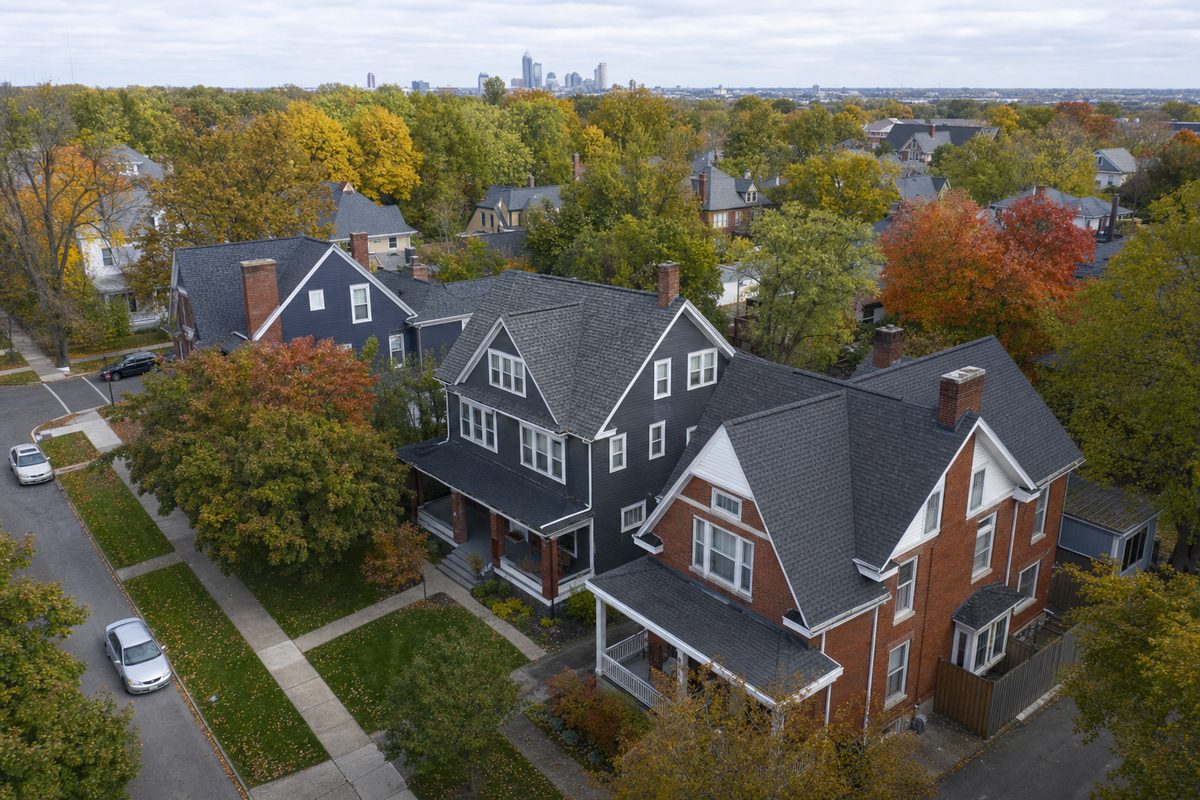
Most Indianapolis roof replacements run $9,500 to $22,000 in 2026, with a typical 22-square architectural asphalt job landing near $11,500 to $16,500 depending on pitch, layers, and access.
Indianapolis roof replacement cost at a glance
Most full roof replacements in Indianapolis fall between $9,500 and $22,000 in 2026, and a standard 2,000 square foot home with a moderate pitch typically lands between $11,500 and $16,500 for architectural asphalt shingles. That range covers tear-off of one layer, new underlayment, standard flashing, ridge and soffit ventilation, and disposal. It moves up for steep or cut-up roofs, multiple existing layers, deck repairs, or premium materials like metal, cedar, or clay tile, and it moves down for a simple, walkable roof with a single layer and easy access. The quote page can turn your address and roof photos into a measured price without a guess built into it.
Cost by roof size
Roofers price by the square, which is 100 square feet of actual roof surface, not the footprint of the house. A 2,000 square foot single-story home with a typical pitch usually works out to about 22 squares once you account for slope and normal waste. Bigger homes, steeper roofs, and homes with dormers or multiple gables all add squares beyond what the footprint suggests. The table below uses architectural asphalt at the price table rates further down this page, plus labor, tear-off, and underlayment, to show how total cost scales with size.
| Roof size (squares) | Approx. footprint | Estimated installed total |
|---|---|---|
| 16 squares | ~1,400-1,600 sq ft | $8,400 - $9,700 |
| 20 squares | ~1,800-2,000 sq ft | $10,600 - $12,100 |
| 22 squares | ~2,000-2,200 sq ft | $11,600 - $13,300 |
| 28 squares | ~2,600-2,900 sq ft | $14,800 - $16,900 |
| 35 squares | ~3,300-3,600 sq ft | $18,500 - $21,200 |
Cost by material
Material choice is the single biggest lever on price after size. Indianapolis homeowners choose almost entirely between asphalt tiers, with metal growing as a longer-lifespan option, and cedar or clay tile appearing mainly on older, architecturally distinct homes. The figures below use the component price table for a 22-square roof and add labor, tear-off, and underlayment to show a realistic installed range. Compare these against architectural versus 3-tab shingles and asphalt versus metal roofing before you commit to a material.
| Material | Price per square (material) | Estimated installed total |
|---|---|---|
| 3-tab asphalt | $85 | $8,600 - $9,800 |
| Architectural asphalt | $120 | $11,600 - $13,300 |
| Designer asphalt | $165 | $14,600 - $16,700 |
| Metal shingle | $280 | $19,200 - $21,900 |
| Standing-seam metal | $320 | $21,900 - $25,000 |
| Cedar | $450 | $29,900 - $34,200 |
| Clay tile | $680 | $43,900 - $50,100 |
How the per-square math works
A quote is not just a shingle price. Every square of roof carries labor, tear-off of the old roofing, and underlayment, and the finished number also includes items that do not scale as cleanly per square, such as ridge and starter shingles, flashing around chimneys and valleys, ventilation components, and disposal. For a 22-square architectural asphalt roof, the component math looks roughly like the table below. The installed total is higher than the raw component sum because starter and ridge material, flashing, extra ventilation, and post-tear-off deck repairs are priced on top of the base square footage, not folded into it.
| Component | Price per square | 22-square subtotal |
|---|---|---|
| Architectural asphalt shingles | $120 | $2,640 |
| Labor | $85 | $1,870 |
| Tear-off | $45 | $990 |
| Underlayment | $28 | $616 |
| Subtotal before extras | - | $6,116 |
| Typical installed total (with flashing, ridge, ventilation, disposal, overhead) | - | $11,600 - $13,300 |
What actually drives the price up or down in Indianapolis
Pitch is the biggest local swing factor. A lot of Indianapolis homes, especially in the older core neighborhoods, were built with steep-pitch roofs and multiple roof planes, which increases both the true square count and the labor time per square because crews move slower and need more fall protection on a steep slope. A simple ranch roof with a 4:12 or 5:12 pitch is straightforward; a Tudor or Victorian with 10:12 or steeper pitch, cross gables, and multiple dormers takes meaningfully longer to strip and re-cover. The number of existing layers matters too. A single-layer tear-off is standard; a second layer adds disposal weight and labor time, and code in most cases will not allow a third layer to stay in place. Deck condition is the wildcard that cannot be priced sight-unseen: once the old roofing comes off, soft or rotted decking has to be replaced before new material goes down, and that is a per-sheet add, not a percentage. Access also matters on tight urban lots, steep driveways, or homes with mature trees close to the roofline, where a dumpster or lift cannot be positioned as easily. Understanding your roofing quote walks through how these line items typically show up on a written estimate.
Indianapolis climate and what it does to a roof
Indianapolis sits in a climate zone that runs a full freeze-thaw cycle repeatedly through the winter: daytime temperatures climb above freezing, nighttime temperatures drop below it, and that repeated expansion and contraction stresses shingles, flashing, and sealant over years of exposure. Heavy, wet snow is common in a typical Indianapolis winter, and when it sits on the roof, uneven melting from attic heat loss creates ice dams at the eaves, where meltwater refreezes and can back up under shingles. Spring in central Indiana brings hail and straight-line wind events that physically wear granules off shingles and can lift or crease them at the edges over repeated storms. Summers are humid, and on north-facing slopes that stay shaded and damp longer after rain, algae streaking is a common cosmetic pattern that shows up as dark or greenish-black stains over time. None of these are one-time events; they are cumulative wear patterns that shorten the useful life of a roof that was already near the end of its service life.
Ice dams, attic ventilation, and why cheap bids skip them
Ice dams are one of the more consequential local issues for Indianapolis homeowners, and the physical mechanism is well understood: warm air leaking from the living space into an under-insulated or poorly sealed attic heats the underside of the roof deck unevenly, melting snow higher on the slope while the eaves stay cold. That meltwater runs down and refreezes right at the eave, building a ridge of ice that blocks normal drainage and forces water backward, under the shingles, toward the deck. The fix has two parts, and both matter. First, a self-adhering ice-and-water shield membrane at the eaves gives the roof a sealed layer that resists that backed-up water even if an ice dam forms. Second, balanced ridge and soffit ventilation keeps the whole underside of the roof deck close to outdoor temperature, so heat is not concentrating unevenly in the attic in the first place, which is the real long-term fix rather than a patch. A cheap bid can skip both of these without the difference being visible on the surface: ice-and-water shield adds material and labor cost at the eaves, and correcting inadequate ridge or soffit ventilation on an older home sometimes means cutting new vents into the roof deck or opening blocked soffits, which takes real time. A bid that looks lower because it left these out is not a comparable bid; it is a roof that is more likely to leak at the eaves the first hard winter.
Neighborhood and housing-stock variation
Indianapolis has genuinely different housing stock from one part of the metro to another, and that shows up directly in roof complexity. Meridian-Kessler, north of downtown, is full of homes built mostly in the 1910s through 1930s in styles including American foursquare, bungalow, Tudor Revival, and Colonial Revival, many with steep pitches, dormers, and in some cases slate roofing on the oldest homes. Irvington, on the city's east side, is one of the largest locally protected historic districts in Marion County, with a residential fabric dating from the late 1800s through the 1930s and a wide mix of gable, hip, and mansard roof forms. Broad Ripple mixes older bungalows and cottages with condos and mid-century homes around the village core, generally with simpler rooflines than Meridian-Kessler or Irvington. Fountain Square, southeast of downtown, is known for historic cottages and double houses on modest lots, which tends to mean smaller roof footprints but sometimes tighter access for equipment. Out in the suburban ring, Carmel, Fishers, Zionsville, Noblesville, and Greenwood carry much more recently built housing stock, generally from the 1990s through today, with straightforward pitches, larger footprints, and easier equipment access, though upscale new construction in those areas increasingly includes complex rooflines with multiple gables. Speedway, near the west side, and the Geist area around the reservoir round out a metro with a genuinely wide range of roof ages and shapes. None of this changes the base price table, but it changes how many squares a given house actually has and how much labor time each square takes.
Steep pitch, complexity, and historic roofing materials
Indianapolis has an unusually large stock of older homes with steep-pitch, multi-plane roofs, and a smaller number of historic properties finished in slate or clay tile rather than asphalt. Pitch changes price two ways: it increases the true square footage relative to the footprint, and it slows down every part of the job, from tear-off to nailing pattern to cleanup, because crews need additional fall protection and cannot move as fast on a steep slope. Complexity compounds that. A roof with multiple gables, dormers, and valleys has more flashing, more cutting and fitting of shingles around penetrations, and more places where water can find a path if the work is rushed. Slate and clay tile roofs, where they still exist on some of the oldest homes in neighborhoods like Meridian-Kessler and Irvington, are a different project entirely: they require specialized installers, different underlayment approaches, and in many cases in-kind replacement to preserve the character of a historic structure, and they cost meaningfully more per square than any asphalt option. A homeowner on a steep or historic roof should expect a bid that reflects real labor hours, not a flat per-square number lifted from a ranch-roof quote.
Permits and local requirements
In Indianapolis and Marion County, permitting for roofing work is handled by the Department of Business and Neighborhood Services (DBNS). A straightforward, like-for-like reroof performed by a contractor listed with the city is generally exempt from a structural permit, provided the work does not change the roof's configuration, does not switch to a heavier covering that increases the load on the structure, does not replace a rafter or more than 128 feet of decking, and does not involve heat-applied roofing material. If any of those conditions apply, the job is treated as a Structural Permit, and because most reroofs involve no structural changes, that permit is typically issued as a Structural Renovation Permit, which does not require plans for review. All permits carry a $32 application fee in addition to any permit fee, though the city's published fee guide does not list a distinct dollar figure specific to roof replacement, so homeowners should confirm the current total with DBNS before assuming a number. Indiana does not license roofing contractors at the state level; the license that matters in Indianapolis is the Marion County contractor license issued by DBNS. The city's own guidance tells homeowners to verify that a contractor is licensed before hiring, and the fastest way to do that is to check the city's published roster of licensed contractors, available on the city's licensed-contractors page, or to call the city's contractor licensing line with the company's name. It is also worth confirming separately that a contractor carries liability and workers' compensation coverage. For permit questions directly, DBNS can be reached at (317) 327-8700 or by email through the city's permit questions address.
Best and worst times to buy a roof in Indianapolis
Late summer through mid-fall is generally the best window to schedule a roof replacement in Indianapolis. Temperatures are moderate enough for proper shingle sealing, days are long, and the work finishes before the first hard freeze and before snow can complicate ice-and-water shield installation at the eaves. Winter is the hardest time to get quality work done: cold temperatures affect how asphalt shingles seal, snow and ice on the roof surface are a safety hazard for crews, and any deck repairs uncovered during tear-off take longer to dry out and address properly in cold, damp conditions. Spring brings its own scheduling pressure because hail and wind events tend to cluster in that season, which pulls crew availability toward storm response work and can extend lead times for a planned, non-urgent replacement. If your roof is near the end of its life, booking in late summer or early fall, before the seasonal crunch, generally gets you better scheduling flexibility and a cleaner install than waiting until a winter leak forces the issue.
Signs it is replacement rather than repair
Not every roof problem calls for a full tear-off. Isolated damage such as a handful of cracked or missing shingles, a small flashing leak around a single penetration, or a localized soft spot can often be repaired. Full replacement generally makes more sense when granule loss is widespread across multiple slopes rather than confined to one area, when shingles are curling or cupping across large sections, when there is evidence of repeated ice dam damage at the eaves over several winters, when the roof is at or past its expected service life for its material, or when a contractor finds soft decking in more than one location during an inspection. Signs a roof needs replacement covers the visual checklist in more depth, and the cost of delaying repairs explains why deferring a replacement past the point of no return tends to add cost rather than save it.
How to compare bids so they are actually comparable
Two bids with different bottom lines are often not describing the same job. Before comparing price, line up each bid on the same terms: how many squares of roof they measured, whether they are removing one layer or more, what underlayment they are using, whether ice-and-water shield is included at the eaves and how far up the roof it extends, whether they are correcting or adding ridge and soffit ventilation, and what happens to pricing if they find damaged decking once the old roof comes off. A bid that is meaningfully cheaper than the others is worth a second look at exactly what it excludes rather than a quick acceptance. Choosing the right roofing contractor and what a roofing contractor actually does both go through the specific questions worth asking before you sign anything. It is also reasonable to ask every contractor you consider to confirm in writing that they carry liability and workers' compensation coverage.
Getting a measured price without an in-home sales visit
A lot of Indianapolis homeowners would rather not schedule an in-home sales appointment just to get a number. It is possible to get a real, measured estimate from roof photos, address-based satellite measurement, and a short set of questions about material preference and roof age, without a salesperson walking the property first. How to get a roof quote without letting anyone in explains the process in detail. Starting a free quote online is generally the fastest way to get a number that reflects your actual roof size and pitch rather than a generic city-wide average, and you can also use the quote tool to compare material options side by side before deciding what to install.
Labor rates and why Indianapolis pricing lands where it does
Roofing labor in the Indianapolis metro runs roughly in line with, to modestly above, the national roofer wage. The U.S. Bureau of Labor Statistics puts the national median annual wage for roofers at $50,970 as of May 2024, while Indiana's state labor market data for the same period put the statewide median for roofers at $56,264 annually, with Indianapolis historically representing the state's largest concentration of roofing employment. That puts Indianapolis labor costs close to the national baseline rather than dramatically above or below it, which is part of why installed prices here track close to national averages once material and complexity are accounted for. Labor is still the largest single line on almost every quote, generally 40 to 60 percent of the installed total, and it is the line most affected by the pitch, layer count, and access factors already covered above rather than by broad regional wage differences.
Preparing for the work
Once you have chosen a contractor, a bit of preparation on your end speeds the job and protects your property. Move vehicles out of the driveway, clear the area directly around the house of anything that could be damaged by falling debris, and let neighbors know a dumpster or lift may occupy street space for a day or two. Preparing for roof replacement covers the full checklist, including what happens to landscaping near the drip line and how to handle pets and interior noise during tear-off. Most straightforward architectural asphalt jobs in Indianapolis take one to three days depending on size and weather; how long roof replacement takes breaks that down by material and roof size.
Frequently Asked Questions
What is the average cost of a roof replacement in Indianapolis?
Most full roof replacements in Indianapolis run $9,500 to $22,000, and a typical 22-square architectural asphalt roof on a standard 2,000 square foot home lands around $11,600 to $13,300 before adjustments for pitch, layers, or deck repairs.
Do I need a permit to replace my roof in Indianapolis?
A straightforward, like-for-like reroof performed by a contractor listed with the Department of Business and Neighborhood Services is generally exempt from a structural permit. A permit is required if the job changes the roof configuration, switches to a heavier covering, replaces a rafter or more than 128 feet of decking, or uses heat-applied roofing material. Confirm your specific project with DBNS at (317) 327-8700.
Does Indianapolis require roofing contractors to be licensed?
Indiana does not license roofing contractors at the state level. In Indianapolis, the license that applies is the Marion County contractor license issued by the Department of Business and Neighborhood Services. You can verify a contractor against the city's published roster of licensed contractors before hiring.
Why do ice dams keep forming at the edge of my roof every winter?
Ice dams form when heat escaping from the living space warms the roof deck unevenly, melting snow higher on the slope. That water runs down and refreezes at the colder eaves, building an ice ridge that blocks drainage and forces water back under the shingles. The long-term fix is balanced ridge and soffit ventilation plus adequate attic insulation and air sealing, not just clearing snow after the fact.
Is ice-and-water shield really necessary in Indianapolis?
Given how common freeze-thaw cycling and ice dams are in central Indiana winters, a self-adhering ice-and-water shield membrane at the eaves is a meaningful protective layer against backed-up meltwater. Some lower bids skip it or use less of it to shave cost, which is worth asking about directly when comparing quotes.
How much more does a steep or complex roof cost in Indianapolis?
Steep pitch and multiple roof planes increase both the true square footage relative to the home's footprint and the labor time per square, since crews move more slowly and need additional fall protection on steep slopes. A steep, multi-gable roof on an older Indianapolis home will generally cost noticeably more per square than a simple ranch roof of the same footprint.
What is the best time of year to replace a roof in Indianapolis?
Late summer through mid-fall is typically the best window. Temperatures support proper shingle sealing, and the work finishes before winter cold and snow complicate installation. Spring often sees crew availability pulled toward storm response work after hail and wind events, which can extend scheduling for a planned replacement.
How many squares of roofing does a typical Indianapolis home need?
A 2,000 square foot single-story home with a moderate pitch typically works out to about 22 roofing squares once slope and normal waste are factored in. Steeper pitches, dormers, and multiple gables increase the square count beyond what the footprint alone suggests.
Do older Indianapolis neighborhoods like Meridian-Kessler or Irvington cost more to reroof?
Often yes, because homes in neighborhoods like Meridian-Kessler and Irvington tend to have steeper pitches, more complex roof shapes, and in some cases historic slate or tile roofing on the oldest properties, all of which add labor time and, for slate or tile, specialized material cost compared with a simpler suburban roof of the same size.
How do I get an accurate roof quote without a salesperson visit?
You can get a measured estimate using roof photos, address-based satellite measurement, and a short set of questions about material and roof age. Starting a request through the quote page is generally the fastest way to get a number based on your actual roof rather than a citywide average.