Roof Replacement Cost in San Antonio 2026
Pricing · 2026-08-10 · National Roofers Team · 19 min read
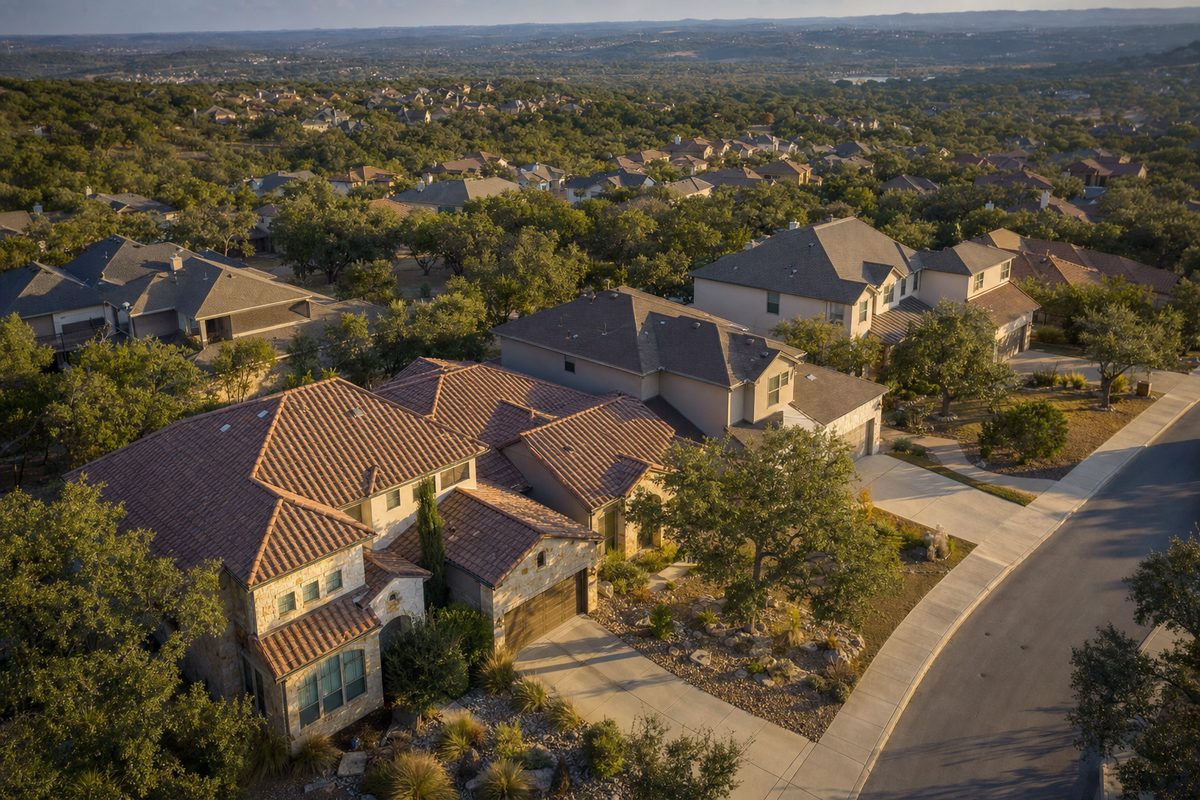
A full roof replacement in San Antonio typically runs $9,500-$21,000 in 2026. See costs by size and material, tile-roof math, permit rules, and the heat and hail patterns that shape local pricing.
San Antonio Roof Replacement Cost at a Glance
A full roof replacement in San Antonio typically costs $9,500 to $21,000 in 2026, depending on roof size, material, and pitch. For a common 2,000 to 2,400 square foot San Antonio house, the roof surface usually works out to about 22 to 26 squares once you account for pitch and waste, and an architectural-shingle job in that range commonly lands at $10,500 to $16,500. The low end fits a simple single-story roof with easy access; the high end reflects a steeper roof, more valleys and penetrations, or a heavier material like clay tile, which is far more common here than in most other Texas cities National Roofers serves. Square footage of a house and square footage of its roof are not the same number, so an address-based measurement beats a guess based on floor plan. You can request a measured quote before deciding on material or timing.
Cost by Roof Size
Roof size, not house size, is what actually drives price. A single-story house with a low, simple roofline can have less roof area than a two-story house with the same floor plan, because a steep or complex roof adds waste and cut area that never shows up in the listed square footage. The table below uses architectural asphalt shingle pricing as the baseline, since it is the most common material chosen in San Antonio. If you want a size estimate specific to your address rather than a citywide average, get a measured roof quote instead of estimating from your home's floor area.
| Roof area | Approximate house footprint | Typical total |
|---|---|---|
| 16 squares | 1,300-1,600 sq ft | $8,500-$11,000 |
| 22 squares | About 2,000 sq ft | $10,500-$15,500 |
| 26 squares | 2,300-2,600 sq ft | $12,500-$17,500 |
| 32 squares | 2,800-3,200 sq ft | $15,000-$20,000 |
| 38 squares | 3,400+ sq ft | $17,500-$23,000+ |
Cost by Roofing Material
Architectural asphalt is the most common choice for San Antonio homes because it balances price, appearance, and durability against the city's heat and periodic hail. Clay and concrete tile show up far more often here than in most U.S. markets, especially on Spanish Colonial and Mediterranean-style homes and in master-planned communities on the north side, and it changes the cost picture substantially. Metal is a growing option in the wooded, higher-pitch neighborhoods toward the Hill Country. The table below applies the quote-engine material price per square to a roughly 24-square roof, a reasonable midpoint for the city, with installation, tear-off, and finish work included in the total. For a side-by-side breakdown of two of the most common choices, see asphalt versus metal roofing.
| Material | Quote-engine material price per square | Typical installed total |
|---|---|---|
| 3-tab asphalt | $85 | $9,000-$12,500 |
| Architectural asphalt | $120 | $10,500-$16,000 |
| Designer asphalt | $165 | $13,000-$18,500 |
| Metal shingle | $280 | $17,500-$25,000 |
| Standing-seam metal | $320 | $19,500-$28,000 |
| Clay tile | $680 | $32,000-$45,000+ |
How the Per-Square Math Works
A roofing square is 100 square feet of finished roof surface. National Roofers' quote engine prices architectural asphalt starting at $120 per square for material, plus $85 for labor, $45 for tear-off, and $28 for underlayment. That is $278 per square across those four line items, or $6,672 for a 24-square roof. The finished total on a real job runs higher because starter and ridge shingles, flashing around chimneys and valleys, ventilation components, dumpster and disposal fees, permit cost, and any decking repair found once the old layer comes off are not part of the four base components. On a tile roof, the same logic applies but the gap between the raw material line and the finished total is usually larger, because tile installation is slower, requires specialized battens or underlayment systems, and often calls for a structural check before work begins. For the full conversion between roofing squares and square footage, see roof replacement cost per square foot, and for a walkthrough of what a written quote should itemize, read understanding your roofing quote.
| Component | Price per square | 24-square baseline |
|---|---|---|
| Architectural asphalt material | $120 | $2,880 |
| Labor | $85 | $2,040 |
| Tear-off | $45 | $1,080 |
| Underlayment | $28 | $672 |
| Four-component subtotal | $278 | $6,672 |
What Actually Moves the Price in San Antonio
Pitch is the first variable. A steep roof, common on the custom homes around Shavano Park and in parts of the Hill Country fringe, takes longer to work safely and uses more material for the same footprint than a low-slope ranch roof. Layers matter next: San Antonio's building code allows a maximum of two layers of roofing material on a re-roof, and a house carrying an old second layer needs a full tear-off before the new roof goes down, which adds cost that a single-layer roof does not have. Decking condition is the variable that shows up after the tear-off starts. Homes built from the 1950s through the 1970s in older San Antonio neighborhoods sometimes have decking that needs partial replacement once the old shingles are off, and that cost is real but should be itemized separately rather than folded into a vague allowance. Access affects labor time: a two-story home, a roof crowded with skylights or solar penetrations, or a property with limited driveway or yard clearance for equipment all add labor hours. Finally, material choice interacts with all of the above; tile and metal both require more precise flashing work around penetrations than asphalt, which is part of why their installed totals scale up faster than the raw material price alone would suggest.
San Antonio Climate and What It Does to Roofs
San Antonio's climate is transitional humid subtropical, hot and often humid in the city itself, with the air turning noticeably drier and slightly cooler toward the Hill Country to the northwest. The city averages roughly 220 sunny days a year, and San Antonio's National Weather Service data shows relative humidity commonly runs near 80 percent in early morning and drops to around 50 percent by late afternoon through the warm months. That combination of intense UV exposure and long, hot summers is the single biggest driver of asphalt shingle aging here: ultraviolet light breaks down the oils that keep shingles flexible, and repeated heating and cooling cycles on a roof surface that can reach 140 to 160 degrees Fahrenheit accelerates granule loss and brittleness over time. Homes closer to downtown and the I-35 corridor sit in the more humid part of the metro, where moisture retention around valleys, vents, and shaded roof sections can shorten the practical life of underlayment and decking. Homes farther northwest toward Helotes and Boerne sit at higher elevation in drier air, which is gentler on shingles but does not remove the UV load, since the Hill Country gets just as much direct sun. Hail is a real physical factor here, not a constant one: San Antonio sits along the edge of the Central Texas hail corridor that follows the I-35 spine north toward Austin and beyond, and hail activity is heavily concentrated in March through June, with April historically the most active month for the region. A roof that has already lost granules to UV exposure is more likely to show physical wear from hail impact than a newer roof, which is one practical reason not to defer a roof already showing heavy wear.
Neighborhood and Housing-Stock Variation
San Antonio's roofing stock varies more by area than in a lot of Texas cities because the metro spans historic urban neighborhoods, mid-century suburbs, master-planned developments, and Hill Country-adjacent towns. King William and Southtown, just south of downtown along the San Antonio River, hold some of the city's oldest housing stock: Victorian and turn-of-the-century homes from the 1850s through early 1900s, many with steep, detailed rooflines, dormers, and in some cases historic standing-seam metal that has to be matched or carefully replaced rather than swapped for a generic product. Alamo Heights, just north of downtown, mixes established mid-size homes with a walkable village character and requires the same attention to roofline detail on many of its older properties. Stone Oak, in north-central San Antonio, is a large master-planned area built mostly from the 1990s onward with bigger, newer homes and more uniform asphalt shingle roofs, which tends to make quoting more straightforward. Shavano Park, an independent city on the north side with large lots and mature tree cover, has more custom-built homes with steeper pitches and a higher share of tile and metal. Helotes and Boerne sit farther out toward the Hill Country, where lot sizes grow, tree cover is heavier, and metal roofing has become more common, partly for its performance under debris and moisture from tree cover and partly for its non-combustible rating in wooded terrain. Schertz and Converse, on the northeast side near Randolph Air Force Base, are dominated by newer production-built subdivisions with straightforward asphalt shingle roofs and simpler access, which is one reason cost per square in that corridor tends to sit toward the lower end of the citywide range.
Permits and Local Requirements
The City of San Antonio Development Services Department requires a re-roof permit for most residential roof replacement work, applied for through the city's BuildSA portal or by paper application. According to the city's official re-roof permit application, the residential permit fee is $25 plus a processing fee and a 6 percent surcharge; commercial re-roof permits are based on project valuation instead of the flat residential fee. The application asks specifically whether the project changes the roof's slope or changes the material to a tile roof; if either applies, the city requires an engineer's assessment inspection report to clear the framing inspection before work proceeds, which matters directly for anyone considering a switch to clay or concrete tile. City code allows a maximum of two layers of roofing material under the International Residential Code, so a home already carrying two layers must have a full tear-off. If any roof penetration is being modified or extended above the new roofline, separate mechanical, electrical, or plumbing permits secured by licensed trade contractors may also be required, and exposing the attic cavity during the work can trigger an insulation upgrade requirement under the International Energy Code if existing insulation is inadequate. A final building inspection from the city's Inspection Division closes out the permit. Homeowners should confirm current fee amounts and any code updates directly with Development Services before starting a project, since fee schedules are revised periodically.
Best and Worst Months to Replace a Roof in San Antonio
Late fall through winter, roughly November through February, tends to be the best window for scheduling a San Antonio roof replacement. Temperatures are milder, which is easier on both crews and certain adhesive and sealant products, and this period falls after the spring hail season and before the deep heat of summer, so contractor schedules are typically less backed up. March through June is the region's most active hail window, with April historically the highest-activity month along the I-35 corridor, and many contractors see a surge in both inspection requests and installation bookings during and right after this stretch, which can extend lead times. July through September brings the most extreme heat, which is workable but slower and less comfortable for crews on the roof deck, and can affect how certain materials handle during installation. If your roof already shows wear and you have some flexibility, scheduling in the cooler months or shortly after the spring storm season eases up gives you the best combination of contractor availability and comfortable working conditions. For a broader look at timing across the state, see the best time of year to replace a roof in Texas.
Signs It Is Replacement Rather Than Repair
Granule loss visible in gutters or downspouts, especially after a summer of intense sun, signals that shingles have lost the protective layer that slows UV degradation, and widespread loss usually means repair will not hold for long. Curling, cracking, or cupping shingles across large sections of the roof, rather than in one isolated spot, point to age and heat-driven wear rather than a single fixable issue. Soft spots in the decking, found by walking the roof or noticed from attic staining, usually mean water has been getting past the surface layer for a while. Multiple shingles physically dislodged or fractured after a hail event, spread across the roof rather than confined to a small area, suggest impact damage has compounded on top of existing UV wear. A roof already past 20 to 25 years old for asphalt, or showing tile that is visibly cracked or slipping in more than a few spots, is generally past the point where patching makes sense. If only one slope or a small localized area shows an issue and the rest of the roof is in good condition, a repair may be reasonable; read the signs a roof needs replacement for a fuller checklist, and see the cost of delaying roof repairs for what happens when a fixable problem is left alone too long.
How to Compare Bids So They Are Actually Comparable
Two bids with different total prices are not comparable unless they specify the same roof area, material tier, and scope of work. Ask every contractor to state the measured roof area in squares, not an estimate based on your home's floor plan, since pitch and complexity change that number significantly. Confirm whether the bid includes full tear-off of existing layers or assumes an overlay, since San Antonio code caps roofing at two layers and an overlay is not always an option. Check whether flashing, ventilation components, and disposal are itemized or bundled into a lump sum; itemized bids are easier to compare piece by piece. If a bid is for tile, confirm whether it includes the engineer's assessment inspection report the city requires for a change to a tile roof, since that cost sometimes gets left out of an initial number. Before hiring anyone, confirm the contractor carries general liability and workers' compensation coverage. That is a basic hiring check on the company you are letting onto your property. For a full framework on evaluating contractors beyond price, read how to choose the right roofing contractor and what a roofing contractor actually does.
Getting a Measured Price Without an In-Home Sales Visit
Satellite and aerial measurement tools can generate an accurate roof area for most San Antonio homes without a salesperson walking your roof or sitting at your kitchen table. This works well for typical suburban roofs in Stone Oak, Schertz, or Converse, where rooflines are well documented in aerial imagery. Older homes in King William or Southtown with complex historic rooflines, or heavily tree-covered properties in Shavano Park, Helotes, or Boerne, sometimes need a closer look at photos or a brief video walk-around to confirm valleys, dormers, and penetrations that satellite imagery alone can miss. Either way, a measured quote lets you see a price range tied to your actual roof area and chosen material before anyone comes to your door. You can get a no-visit roof quote or read more about how to get a roof quote without letting anyone in your home for the full process.
Why Clay and Concrete Tile Cost More Here Than Elsewhere
Tile is more common in San Antonio than in most parts of the country National Roofers serves, largely because of the city's Spanish Colonial architectural tradition and its prevalence in newer custom subdivisions on the north side. The quote-engine price of $680 per square for clay tile, compared with $120 per square for architectural asphalt, means the material cost alone on a 24-square roof is $16,320 for tile versus $2,880 for architectural asphalt, a difference of $13,440 before labor. Labor compounds that gap: tile installation takes longer per square than shingle work because each piece is set individually and flashing details around hips, valleys, and penetrations require more precision. The city's own permit rules add a real cost most homeowners do not anticipate: switching an existing roof to tile requires an engineer's assessment inspection report to clear the framing inspection, because tile is significantly heavier per square foot than asphalt and older framing was not always designed to carry that load. That inspection is a genuine line item to budget for, separate from the roofing bid itself. For homeowners weighing tile against a lighter, faster-to-install option, architectural versus 3-tab shingles is a useful comparison one tier down the cost ladder, and asphalt versus metal roofing covers the mid-tier alternative that has become more common in the Hill Country-adjacent parts of the metro.
Typical San Antonio Home Size and What It Means in Squares
Average home size in San Antonio runs a bit above the national average. Market data has put the citywide average around 2,000 to 2,400 square feet of living area, with newer construction in the metro trending toward the lower end of that range in recent years as builders trim floor plans for affordability. A 2,000 square foot single-story home with a simple gable roof typically works out to about 22 roofing squares once pitch and waste are factored in, matching the standard planning figure used across National Roofers' Texas markets. A larger home in the 2,400 to 2,800 square foot range, more typical of newer construction in Stone Oak or Schertz, generally lands closer to 26 to 30 squares. Homes with a second story or a more complex roofline, common among custom builds in Shavano Park or older properties in Alamo Heights, can run higher in squares relative to their floor area than a single-story home of the same size, because roof area depends on shape and pitch as much as footprint. None of these figures substitute for a measured quote, but they are a reasonable starting point for budgeting before you request a price estimate.
Preparing for a San Antonio Roof Replacement
Clear vehicles from the driveway and move anything breakable stored near the house, since tear-off debris falls close to the exterior walls and a dumpster or trailer usually needs driveway or yard access for the duration of the job. Trim back low tree branches over the roofline if you have heavy tree cover, common in Shavano Park, Helotes, or Boerne, both for crew safety and to reduce the chance of debris scraping new shingles or tile during work. If your home is on well water or has a pool, ask the contractor how tear-off debris and nail runoff will be managed near those systems. For homes in King William or other historic districts, check whether any exterior modification review applies before work begins, since roofline changes in a designated historic district can require additional review beyond the standard city permit. Plan around the season if you can: scheduling outside the spring hail season and outside the hottest weeks of summer, as covered above, generally gives you the most contractor availability and the most comfortable working conditions for the crew. For a full walkthrough of what to expect day by day, see how to prepare for a roof replacement and how long roof replacement takes.
How San Antonio Compares to Other Texas Markets
San Antonio's typical installed range sits close to Houston's, with both cities centering an architectural-asphalt job around $10,000 to $16,000 for a common 22 to 24 square roof, though San Antonio's greater share of tile roofs pulls its upper end higher for homes that use that material. Dallas-Fort Worth sits in a similar band as well, though hail frequency and contractor demand patterns differ enough that timing advice does not transfer directly between metros. What changes most between the three is not the base material pricing, which comes from the same quote engine, but local factors: San Antonio's tile prevalence, Houston's humidity and coastal wind considerations, and DFW's own hail season timing. If you are comparing costs across Texas markets, see roof replacement cost in Houston and roof replacement cost in Dallas-Fort Worth alongside this page.
Frequently Asked Questions
What does a roof replacement cost in San Antonio in 2026?
Most full replacements run $9,500 to $21,000, with a common 22 to 26 square architectural-asphalt roof typically landing between $10,500 and $17,500. Tile roofs run substantially higher because of both material and labor costs.
Why is tile roofing more common in San Antonio than in other cities?
Clay and concrete tile fit the city's Spanish Colonial architectural tradition and show up often in both older homes and newer custom subdivisions on the north side. Tile costs far more than asphalt, at $680 per square in material alone versus $120 for architectural asphalt, and it also requires an engineer's assessment inspection report if you are converting an existing roof to tile.
How much is a residential re-roof permit in San Antonio?
According to the City of San Antonio Development Services Department's re-roof permit application, the residential fee is $25 plus a processing fee and a 6 percent surcharge. Confirm the current total with Development Services before budgeting, since fee schedules can change.
Does San Antonio require an inspection for a tile roof conversion?
Yes. The city's re-roof permit application specifically asks whether the project changes the roof to tile or changes the roof slope, and if either applies, an engineer's assessment inspection report is required to clear the framing inspection before the final building inspection.
How many layers of roofing are allowed in San Antonio?
City code allows a maximum of two layers of roofing material per the International Residential Code. A home that already has two layers needs a full tear-off before a new roof can go down.
When is hail most likely to affect a San Antonio roof?
Hail activity in the region is concentrated from March through June, with April historically the most active month along the I-35 corridor that runs through San Antonio. Hail should be considered as a physical cause of wear on shingles and tile, not as a scheduling emergency by itself.
Does San Antonio's heat really affect roof lifespan?
Yes. The city averages roughly 220 sunny days a year, and roof surface temperatures on dark materials can reach 140 to 160 degrees Fahrenheit in summer. That combination of intense UV exposure and repeated heat cycling accelerates granule loss and shingle brittleness over time.
Is the Hill Country side of San Antonio different for roofing than the city core?
The Hill Country side toward Helotes and Boerne sits at higher elevation with drier air and more tree cover, while the city core and areas along the I-35 corridor run more humid. Both sides get similar UV exposure, but heavier tree cover in the Hill Country area is part of why metal roofing has become more common there.
What size roof does a typical San Antonio home need?
A 2,000 square foot single-story home typically works out to about 22 roofing squares after pitch and waste. Larger homes in the 2,400 to 2,800 square foot range common in newer north-side subdivisions usually run closer to 26 to 30 squares.
Can I get a roofing price without a sales visit?
Yes. Satellite and aerial measurement can generate an accurate roof area and price range for most San Antonio homes without an in-home visit. Older or heavily tree-covered properties sometimes need photos or a short video walk-around to confirm details that aerial imagery can miss.